

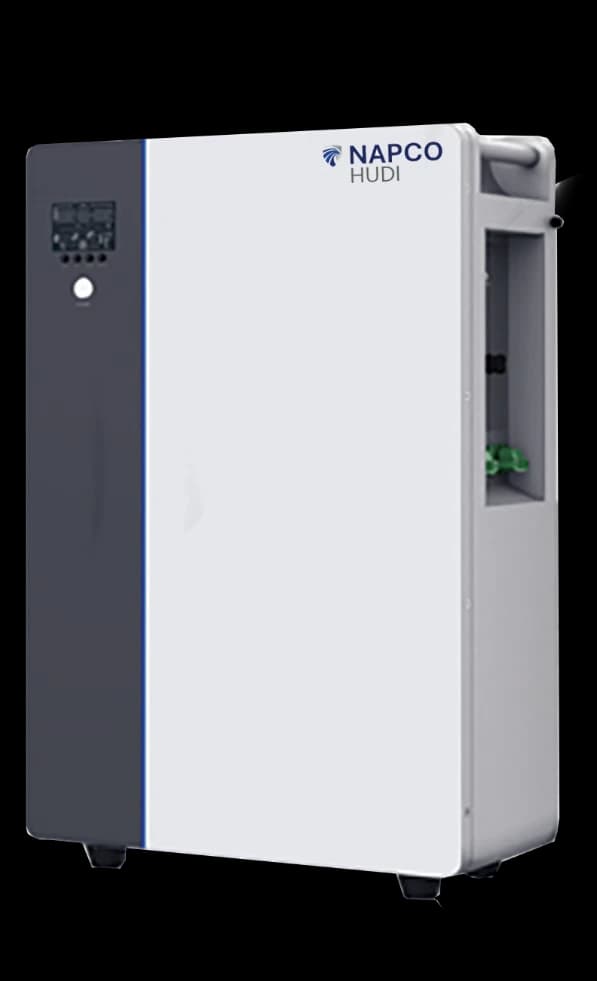
 Product render
Home and small business
HUDI Series
HUDI Series
All-in-one battery energy storage for homes and small businesses
- AC output power
- 5 kW
- Base battery energy
- approx. 4.8 kWh
Intelligent energy infrastructure for Iran’s future
NAPCO focuses on system engineering, energy management and integration of battery storage systems for residential, commercial, industrial and utility-scale applications.
 Product render
Home and small business
HUDI Series
All-in-one battery energy storage for homes and small businesses
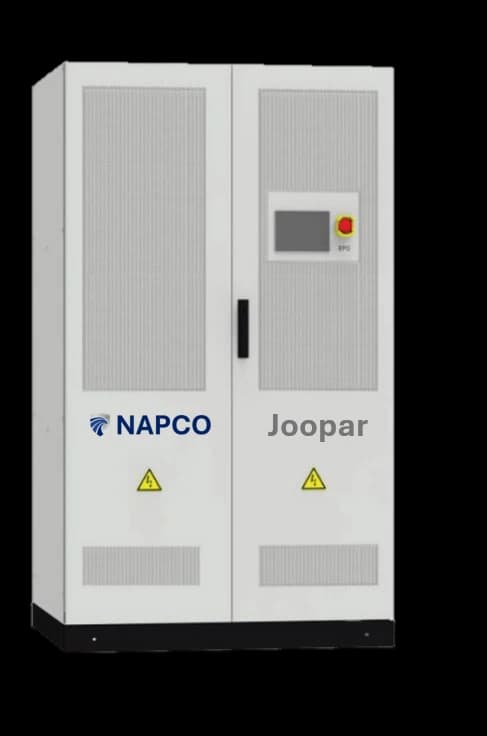 Product render
Commercial and industrial
JUPAR Series
Cabinet-based commercial and industrial energy storage with energy management
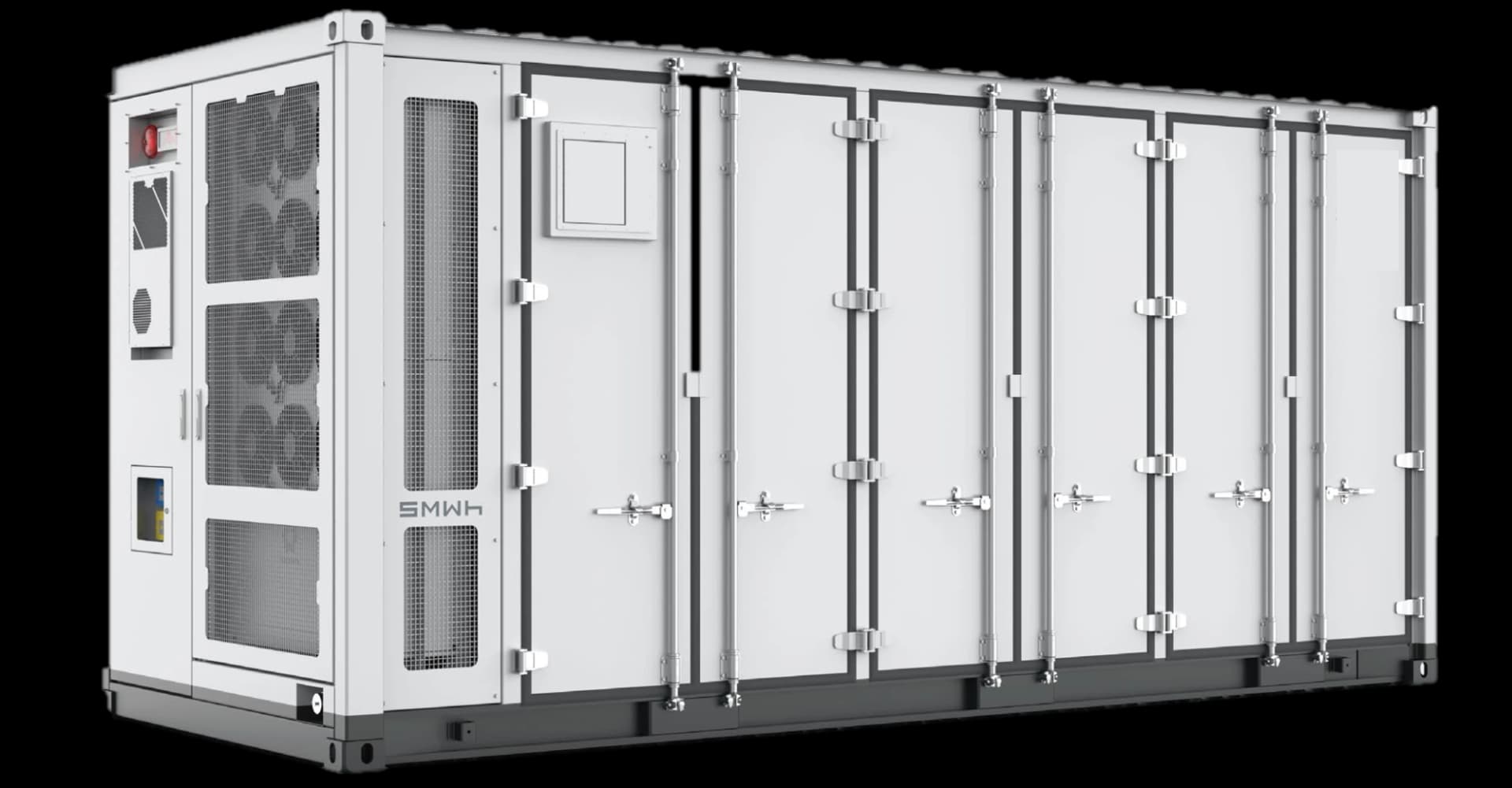 Product render
Utility-scale and large industrial
HEZAR Series
Approximately 5 MWh containerized storage block for large-scale projects
Storage system architecture and integration.
Battery and energy monitoring and control.
Deployment and project-specific technical support.
Store energy at the right time and use it at peak demand to manage the power drawn from the grid. Savings depend on the tariff and the load profile.
Use solar generation at other hours than when it is produced, within the battery capacity and the energy-management strategy.
Storage and switching designed to keep defined loads supplied. Backup duration depends on the load power and the actual usable capacity.
An independent storage branch added on the AC side of an existing plant, after the connection and protection have been checked for compatibility.
Coordinated control of solar, grid, battery and, where needed, a diesel generator, designed around the needs of the project.
kW measures power at a moment; kWh measures stored energy. Both, alongside efficiency and usable depth of discharge, matter for backup runtime.
HUDI is documented for home and light-commercial use. Sizing depends on load and required backup duration.
The source datasheet describes a 261 kWh configuration and 125 kW base system output.
Not necessarily. Its documented 5,015.96 kWh is an energy capacity figure; PCS power rating is project-dependent.
The company presentation describes an AC-coupled retrofit concept. Final integration needs engineering review.
Request current model-specific certificates or test reports from the engineering team.
The selected website visuals are identified as product renders rather than proven field installations.
Application, load power, desired backup duration, available solar generation, grid details and site location are a helpful starting point.